
Why Do Female Mammals Outlive Males?
It is common knowledge that women tend to live longer than men. This is true not only for humans, but for mammals in general. However, the reason behind this remained unclear for a very long time. Although we knew there was a difference in lifespan, we didn’t know what caused it: behaviour, environment or biology? An international team of biologists, including scientists from Antwerp ZOO, has now examined this topic as part of a large-scale research project. Their conclusion? Even if all natural hazards were eliminated, females would still outlive males. The answer does not lie in chance, but is deeply rooted in our evolutionary history.
The reason for conducting this study
‘We know that women all over the world, irrespective of country, culture or even historical period, generally live longer than men,’ says Zjef Pereboom, Manager of the Antwerp ZOO Centre for Research and Conservation (ZOO Science) and one of the biologists involved in this study. The same pattern appears in mammals: female mammals tend to outlive males.
‘Earlier studies assumed that this was determined solely by behaviour or risks encountered in their natural environment. Scientists believed that males were more likely to die in struggles for dominance or to fall prey to predators.’ However, there is more to it.
‘A key finding of this study is that the same male/female lifespan pattern persists in zoos,’ explains Pereboom. Animals in zoos are better protected against predators, hunger and extreme stress. Also, when they fall ill, they receive veterinary care. ‘By eliminating these negative factors we gain clearer insight into what can be attributed purely to biology: genes, reproduction and evolution.’
The study shows that the difference in lifespan between males and females is smaller in zoos than in the wild, but it still continues to exist. This indicates that the difference is rooted in DNA and shaped by evolution. Improved environmental factors and medical care can narrow the gap, but they will not make it disappear - as we also observe in humans.
Life expectancy of 1,176 animal species
The researchers collected data on 1,176 animal species – 528 mammals and 648 birds – from zoos all over the world, using the international ZIMS database.
ZIMS, the Zoological Information Management System, is the world’s largest database of information on individual zoo animals. More than a thousand zoos, aquariums and wildlife parks worldwide share their knowledge and data through this platform to improve animal care and species conservation. This vast resource is invaluable not only for animal management but also for scientific research.
Thanks to this global exchange of information, the researchers were able to compare the lifespans of all these species while excluding natural hazards such as predation, starvation or disease. The results were remarkably consistent: 72% of female mammals live, on average, 12% longer than males. In avian species, however, this pattern is reversed – with 68% of males outliving females by an average of 5%. Even in the safety of a zoo environment, the difference in lifespan persists.
So, what determines an animal’s lifespan?
A possible explanation lies in chromosomes, the carriers of our DNA. They contain the genes that determine how an organism develops and functions. Sex chromosomes (the chromosomes that determine biological sex) differ between males and females. In mammals, males have one X and one Y chromosome, while females have two identical copies of the X chromosome.
Scientists believe that having two X chromosomes offers females better protection against harmful mutations. If one X chromosome contains a faulty gene, female cells can compensate with the second copy, increasing their chances of survival. Males do not have this spare copy, so they are generally more vulnerable to mutations on their single X chromosome.
In birds, however, the pattern is completely reversed: males often live longer than females – which is exactly what we would expect based on the genetic explanation. Male birds have two identical sex chromosomes (two Z chromosomes), while females are at a disadvantage with one Z and one W chromosome.
Reproduction and parental care
The study shows that, in addition to genetics, reproduction strategy also plays a role in determining lifespan. In polygamous species, where males mate with multiple females, competition is fierce. ‘In species like these, males that are bigger, stronger or more conspicuous than their rivals stand the best chance of reproducing,’ explains Pereboom. ‘This competition demands a great deal of energy, increases stress and raises the risk of injury – all factors that shorten male lifespan. Many avian species, however, are monogamous, and because partners tend to remain faithful, competition among males is much lower and they tend to live longer.’
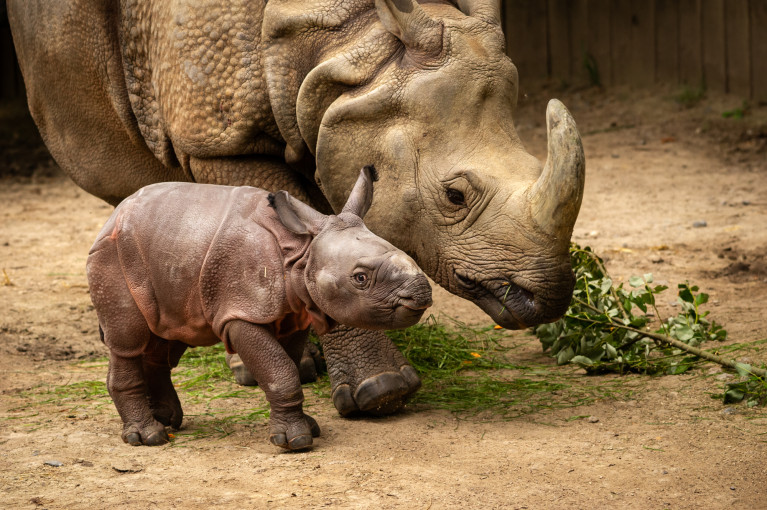
Parental care also proved to be an important factor. In mammalian species where females provide most of the parental care, they live longer on average than males. ‘This may seem counter-intuitive, because caring for young is an energy-consuming task,’ adds Pereboom.
‘However, evolution works in the long term: if you invest in vulnerable offspring, your own survival becomes all the more important in order to keep giving that care.’
What conclusions can we draw from this?
The large-scale study provides a solid foundation: for the first time, researchers can demonstrate that differences in lifespan between males and females are rooted in evolution. The next step is to understand how this works. How do hormones such as testosterone and oestrogen influence this? How do stress, energy expenditure or ageing at the cellular level influence these patterns?
The scientists also aim to link the zoo data to field research on wild animal populations. ‘We aim to determine how much of the difference is genetic and how much depends on environmental factors,’ concludes Pereboom. By continuing to expand these comparative studies, biologists ultimately hope to gain a clearer understanding of why males age differently from females – knowledge that reveals not only something about animals, but also something about us and how we age.