World Ocean Day: Saving the Ocean Means Saving Ourselves
CORAL REEFS TODAY | WHAT DOES THE ZOO DO? | WHAT IS SECORE? | WHAT YOU CAN DO TO PROTECT THE OCEAN
All life on our blue planet depends on the ocean. Yet humanity continues to treat it with alarming carelessness. Biodiversity is declining year after year as a result of overfishing, pollution, and climate change. This makes World Ocean Day, celebrated annually on June 8, more important than ever.
The good news is that with the right measures, we can still reverse this trend. ZOO Antwerp contributes by financially supporting SECORE International, a non-profit organisation dedicated to conserving and restoring coral reefs worldwide. One of the ZOO’s flagship exhibits is its spectacular reef aquarium. ZOOkeeper Thomas Van Puymbroeck, a passionate recreational diver, takes us on a journey into the fascinating yet highly threatened underwater world.
“For us, every day is World Ocean Day.”
Renowned British biologist and broadcaster Sir David Attenborough summarised it powerfully in his acclaimed documentary Ocean: “If we save the sea, we save the world.” Yet as a society, we often fail to grasp the scale at which life in the oceans is being destroyed. Unlike environmental degradation on land, much of it remains out of sight. Coral reefs are among the most diverse ecosystems on Earth, supporting as many as 100,000 species. They can rightly be described as the rainforests of the sea, harbouring approximately one quarter of all marine biodiversity. Remarkably, they occupy just 0.2% of the Earth's surface.
Acidifying Seas
Australia’s Great Barrier Reef, located off the country’s northeastern coast, is the world’s best-known coral reef system and is roughly eleven times the size of Belgium. Other major reef systems can be found throughout the Coral Triangle of Indonesia, the Philippines and Papua New Guinea, as well as in the Maldives, the Red Sea and Central America. To say that reefs are under pressure would be an understatement. More than 80% have already been affected by coral bleaching. This phenomenon occurs when corals expel the colourful microscopic algae - known as zooxanthellae - that live within their tissues.
“The main drivers of coral bleaching are rising sea temperatures and ocean acidification,” explains Thomas. “Seawater becomes more acidic as it absorbs increasing amounts of greenhouse gases. Hard corals are composed largely of calcium carbonate, which does not tolerate acidic conditions well. Their skeletons become increasingly fragile, meaning that even relatively minor storms can cause reefs to collapse.”
Through his diving expeditions, Thomas has witnessed first-hand both the resilience and vulnerability of coral ecosystems. “In the Red Sea, corals can tolerate much higher temperatures than many Caribbean species. The ocean is remarkably resilient and capable of adapting to environmental change. Perhaps humanity cannot completely stop global warming, but we must do everything possible to slow it down. In Egypt, some corals thrive in water only 10 to 20 centimetres deep, where temperatures can reach 36–37°C, yet they show no signs of bleaching. In Curaçao, however, I encountered extensive coral mortality caused by disease. That was a very painful experience.”
“I do not believe my children will grow up in a world without coral reefs. Many coral species are already adapting. Large-scale restoration programmes will make a difference. One advantage is that coral reefs are economically important ecosystems.”
Despite the severity of the challenges, Thomas remains cautiously optimistic. “The extraordinary reefs that Jacques-Yves Cousteau documented may never return in their original glory. Nevertheless, I do not believe my children will grow up in a world where coral reefs no longer exist. Many species are adapting. Large-scale restoration efforts are being implemented worldwide and must play a crucial role in securing their future.
Coral reefs also support countless livelihoods. Tourism and fisheries depend heavily on healthy reef ecosystems. Around the world, marine protected areas have been established to safeguard biodiversity. Initially, these reserves can have economic consequences, as tourism and fishing activities may decline. However, fish do not recognise reserve boundaries. As populations recover within protected areas, individuals disperse into surrounding waters.
The COVID-19 pandemic offered a striking example in the Red Sea. Reduced tourism pressure provided marine ecosystems with a temporary respite, and fish populations quickly rebounded. Of course, there is always a trade-off. As more people seek to experience these underwater wonders, human impacts such as pollution inevitably increase again.”
How Does the Zoo Help?
Let us return from these distant oceans to the role played by ZOO Antwerp. The Zoo financially supports the SECORE project (short for Sexual Coral Reproduction) which aims to restore coral reefs around the world. Corals can be propagated both sexually and asexually. Sexual reproduction occurs through a process known as coral spawning, during which corals release millions of eggs and sperm into the water column. This event typically takes place around the full moon, when environmental conditions are most favourable for reproduction.
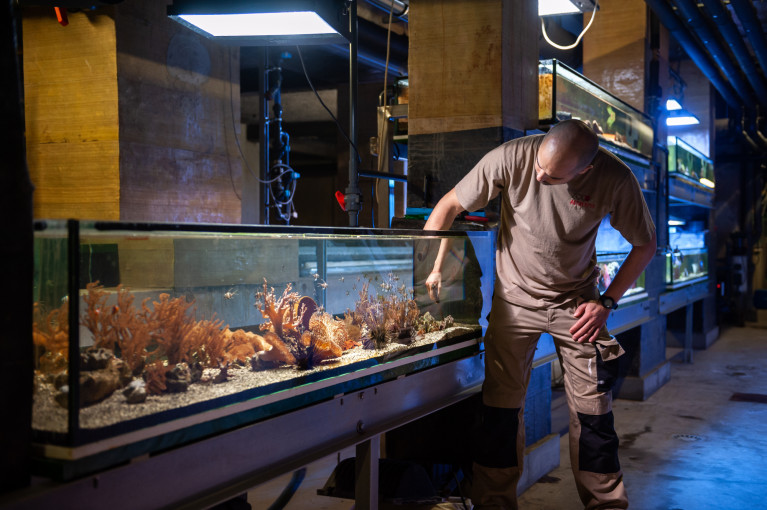
With its reef aquarium, inaugurated in 2015, ZOO Antwerp maintains an impressive coral reef ecosystem of its own. The aquarium contains 300,000 litres of seawater maintained at a constant temperature of 25°C. LED lighting provides daylight conditions from 10 a.m. until 10 p.m. The system is largely self-sustaining, and the Zoo collaborates closely with other institutions, particularly Burgers’ Zoo in Arnhem and Rotterdam Zoo.
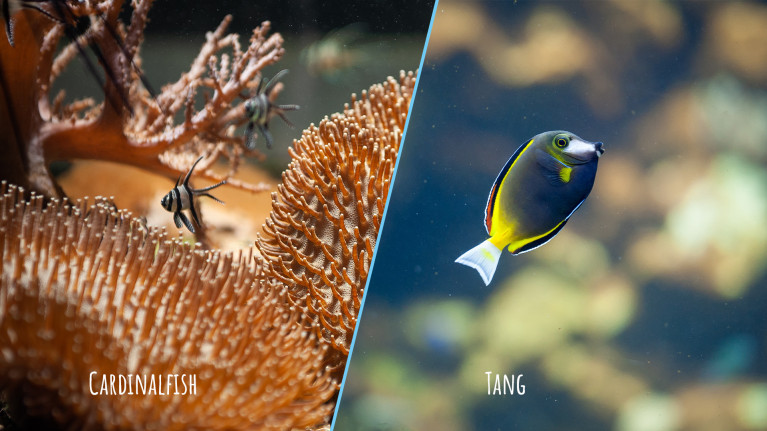
“In asexual propagation, a small fragment of coral is removed and attached to a substrate such as a plastic tile or a piece of rock,” Thomas explains. “If you observe the reef from above, you will notice our ‘maintenance crew’, including parrotfish and tangs. These species graze on algae, helping corals establish themselves more effectively on rocky surfaces. Several fish species in the aquarium reproduce naturally. Cardinalfish, for example, engage in mouthbrooding: the male incubates the eggs in his mouth and releases the young among sea urchins once they become viable. These newly hatched fish then begin feeding on zooplankton to grow. The water in our aquarium is teeming with life. Under a microscope, it is truly extraordinary to observe.”
The Foundation of All Life
At the very base of marine ecosystems lies phytoplankton, the most important producer of oxygen on Earth, far surpassing even the contribution of tropical rainforests. Phytoplankton obtains energy through photosynthesis, using sunlight to convert carbon dioxide (CO₂) into glucose while releasing oxygen as a by-product. In turn, phytoplankton serves as food for zooplankton, which occupies the next level of the marine food web. “Even the largest sharks and whales ultimately depend on these microscopic organisms,” says Thomas. “Not because they feed directly on phytoplankton, but because phyto- and zooplankton form the foundation of the entire food chain. Corals depend on them as well.”
“One of the most destructive fishing practices is the use of dynamite. It is completely illegal, yet it still happens. I witnessed it myself while diving in the Red Sea. At the same time, I understand the underlying reality: fishermen want to feed their families. That is why alternatives must be provided.”
Sustainable fisheries are essential for restoring balance to marine ecosystems. Thomas points to parrotfish, one of the algae-grazing species that can also be observed in the ZOO’s reef aquarium, as an example. “Parrotfish are highly valued as food and are therefore heavily overfished. As their numbers decline, algae can proliferate on coral reefs, making it more difficult for coral polyps to establish and grow. Sea urchins, another important grazer, face similar pressures from overharvesting.
One of the most destructive fishing practices is the use of dynamite. It is completely illegal, yet it still happens. I witnessed it myself while diving in the Red Sea. At the same time, I understand the underlying reality: fishermen want to feed their families. That is why alternatives must be provided. This brings us back to marine protected areas. In many regions, former fishers are employed to help manage and protect these reserves from illegal activities. In doing so, they can earn a livelihood while contributing to the conservation of the ecosystems upon which their communities ultimately depend.”
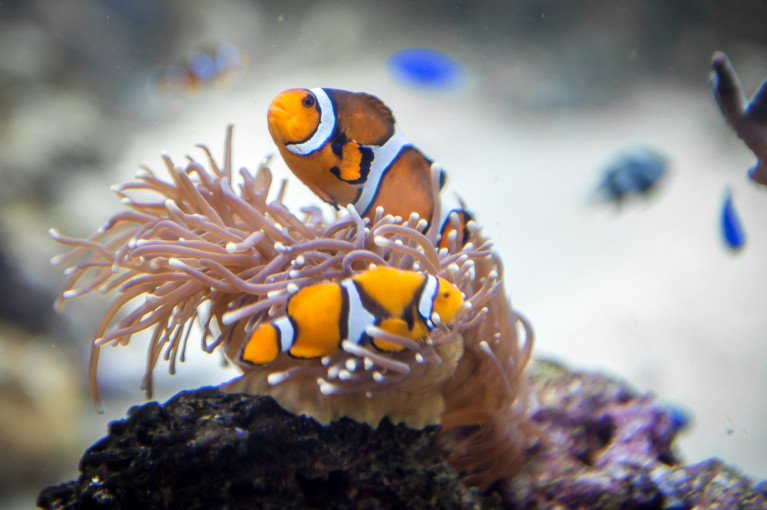
Protecting Habitats Rather Than Individual Species
According to Thomas, effective conservation requires protecting entire habitats rather than focusing on single species. “If you concentrate on one species alone, the food web remains disrupted. That approach simply does not work. A good example can be found in South Africa. There, abalone (a large marine snail) is considered a delicacy in parts of Asia and has been heavily harvested. Abalone feed on kelp, one of the fastest-growing seaweeds in the world. When abalone populations decline, kelp forests can expand uncontrollably. At first glance that may seem positive, but kelp forests also provide shelter for juvenile sea lions. Those sea lions are, in turn, prey for great white sharks. As the kelp becomes denser, sharks struggle to hunt effectively and may leave the area. Consequently, sea lion populations increase dramatically while fish stocks decline. The next step in this ecological cascade is that growing sea lion populations begin feeding on colonies of endangered African penguins. It is yet another illustration of why healthy marine ecosystems and well-managed ocean reserves are so important.”
Thomas believes it is unfortunate that a dedicated World Ocean Day is necessary to remind people of the services oceans provide. “In some respects, we know more about the Moon than about the Mariana Trench, which reaches depths of nearly 11 kilometres in the Pacific Ocean south of Japan. Yet even there, plastic pollution has been found. Only about 25% of the seafloor has been mapped so far, despite the fact that oceans cover roughly 70% of the Earth's surface and support billions of people. If the oceans die, humanity will ultimately share the same fate.”
Diving into the Reef Aquarium
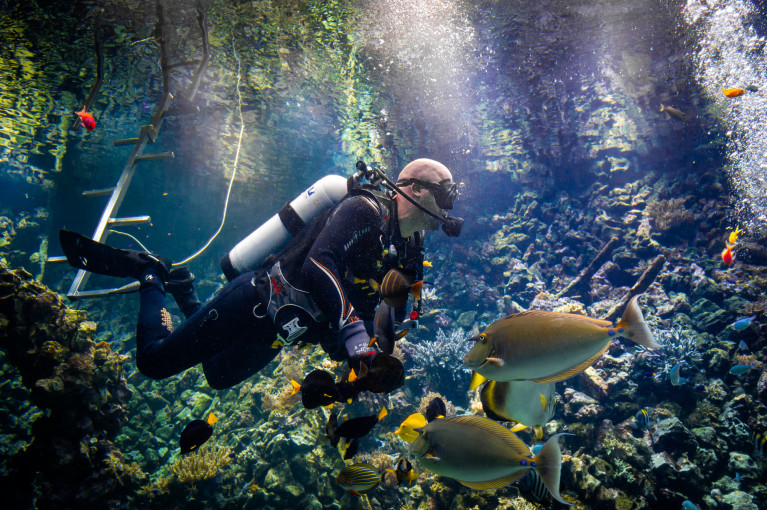
Every other day (and daily during school holidays) Thomas and his colleagues dive into the ZOO’s reef aquarium at 2 p.m. Using specialised full-face communication masks, they can speak directly with a colleague outside the tank, who relays information and answers visitors’ questions. “It is incredibly rewarding to inspire a sense of wonder in our visitors. Not every child in a group will become fascinated by what they see. But if you can ignite a passion for nature and biology in even a few of them, then you have succeeded. And perhaps one day, one of those children will become a marine biologist.”
Why Is the SECORE Project Important to ZOO Antwerp?
SECORE International is one of the world's leading organisations dedicated to the conservation and restoration of coral reefs. Founded in 2001 at Rotterdam Zoo, the organisation has grown into a global network of more than sixty partners, including public aquariums, zoos, research institutes and universities.
SECORE adopts a multidisciplinary approach that combines scientific research, education, conservation and active reef restoration. Through its worldwide network of scientists, aquarium professionals, local authorities and conservation partners, the organisation develops innovative restoration techniques and conducts applied research aimed at scaling up coral reef recovery efforts.
The need for such work is urgent. In 2024, exceptionally high ocean temperatures triggered widespread coral bleaching events across the globe. Yet SECORE achieved a significant milestone: corals produced by the organisation in 2023 and subsequently outplanted onto natural reefs survived these extreme temperature conditions without bleaching.
Considerable challenges remain before coral reef restoration can be implemented on a truly global scale. Nevertheless, these results represent an important step forward and demonstrate the effectiveness of the techniques that have been developed. New genetic combinations are helping to produce corals that are more resilient to the impacts of climate change.
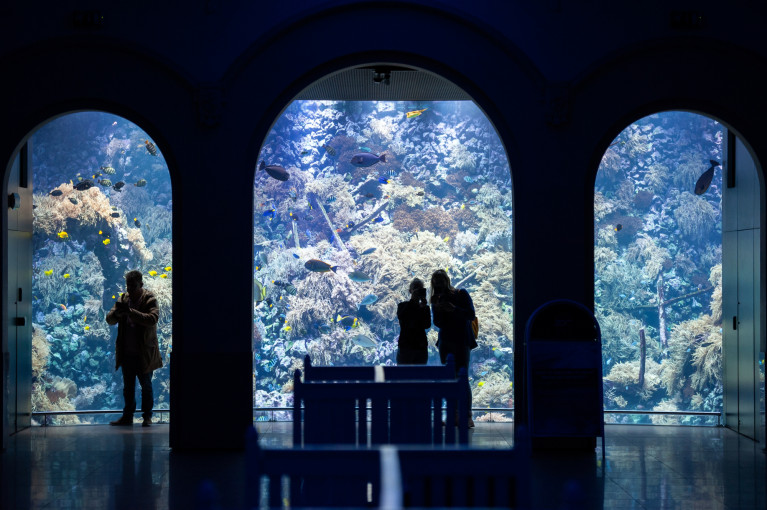
In 2015, ZOO Antwerp opened one of Europe's most spectacular and largest reef aquariums. The exhibit highlights the extraordinary biodiversity associated with coral reefs while drawing attention to their dramatic global decline. At the same time, it contributes to awareness and support for the conservation of these unique and vulnerable ecosystems. Today, rising ocean temperatures, coastal development and the impacts of mass tourism remain among the most significant threats facing coral reefs worldwide.
Practical Tips: Everyone Can Contribute to a Healthier Ocean
By making small changes to our daily habits, we can help our oceans recover. Planning to go diving or snorkeling on vacation? We’ve got some great tips for that, too.
-
Enjoying seafood? Whenever possible, choose locally sourced species that have been harvested sustainably.
-
If you plan to swim, snorkel or dive, use reef-safe sunscreen products. Look for labels indicating “reef safe” and avoid ingredients such as oxybenzone, avobenzone and octinoxate, which can negatively affect the symbiotic algae living within corals.
-
When travelling, purchase souvenirs that directly benefit local communities and avoid products made from coral, shells or sea turtles. Every shell on a beach plays a role in the ecosystem. Even the skeleton of a dead coral can contribute calcium carbonate that helps maintain the structural integrity of a reef.